

He's Calling Back the Shepherds
A Prophetic & Historical Look at Biblical Shepherds—physically & spiritually

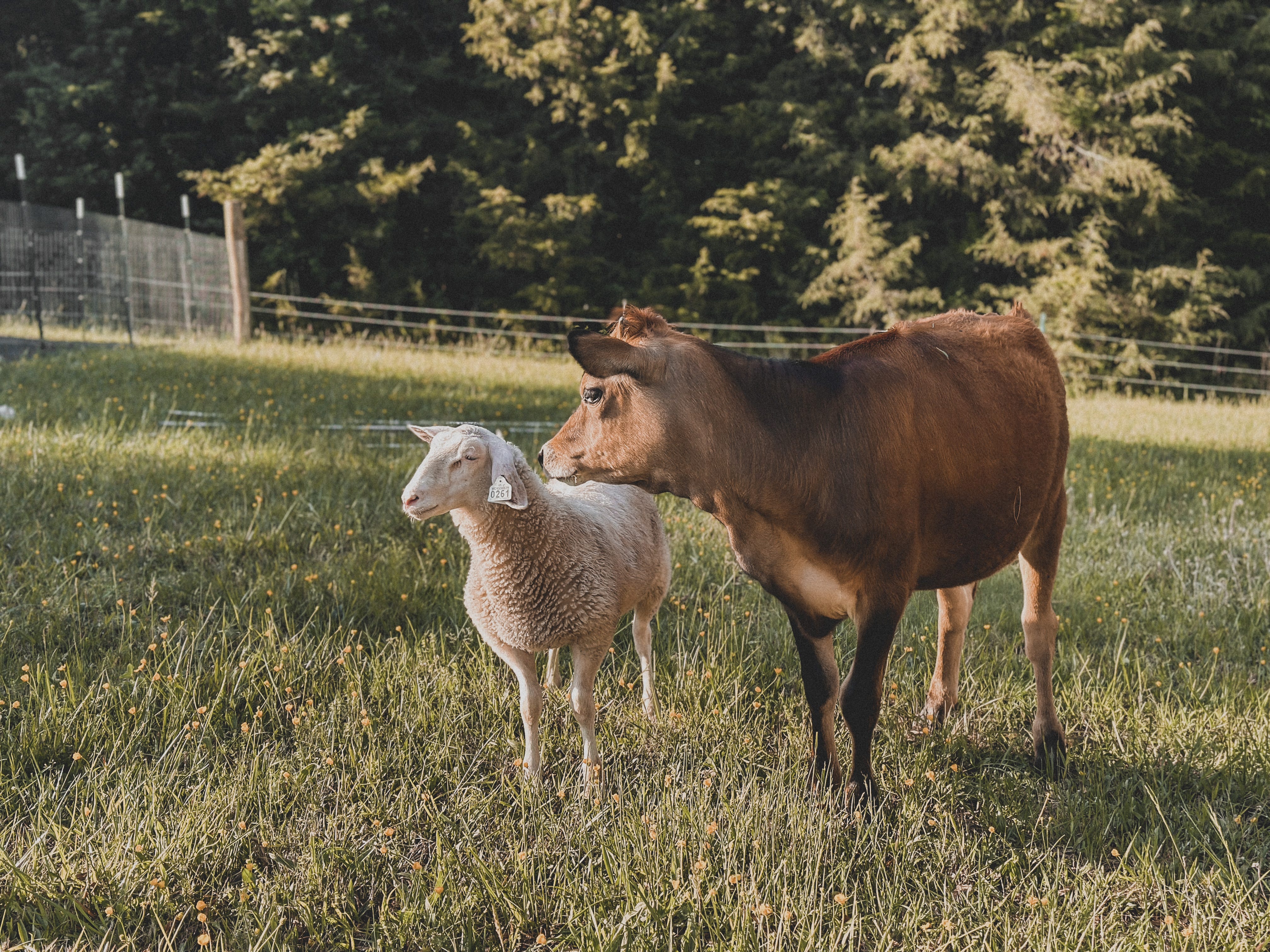
I have personally been wrestling with the Lord for months on this topic. I have prophetically felt an intense impression from Holy Spirit about this, and just like Jacob wrestling, I feel as though I have wrestled within myself. Months of spiritual healing, exhortation, rebuke, correction, alongside nurturing myself and others. When someone asked me at the beginning of the year why I was still hosting fellowship dinners at our home even though many of the people at our table had also left the same church we just had, my answer was this: “Because I refuse to let the sheep scatter again.”
We’ve been through this twice, and the sheep that “scattered” from the first church split are strung to-and-fro. I refused to let that happen again. I hear of some from the first split that play church but are really still feeling empty and alone. I hear of others that are just going through the motions but do not have accountability or anyone teaching them. And it grieves me. And it grieves Jesus. But there are some that have found landing places, too. Places where shepherds are caring for their flock. And that brings me joy.
And so, I refused to stop fellowshipping. Recently when talking to a friend, I said, “I think I need to write this out—God is calling back the shepherds.” And not in the way you may think. For the record, I am not calling myself a shepherd, but I was using my personal recent experience as explanatory imagery to lead into this.
It is no coincidence that the word “pastor” and “pastoral” are used in place of the term “shepherd” today. It is no coincidence that the agrarian way of living is making a come back. And when I finally put two and two together, it was like a rolodex was flipping through my head on high speed. Some people would call it a “download” from Yahweh. Maybe that’s what it was. But I feel like more so, it was a new glimpse of the mind of Christ and what He knows and loves and teaches.
So let’s walk through it.
Here is the American definition of “pastoral”.
pastoral —
[pas-ter-uhl, pah-ster-]/ ˈpæs tər əl, ˈpɑ stər- /
ADJECTIVE
(1): of, relating to, or composed of shepherds or herdsmen
… a pastoral people, seminomadic in their habits. —J. M. Mogey
(2): devoted to or based on livestock raising
a pastoral economy
b: of or relating to the countryside : not urban
a pastoral setting
c: portraying or expressive of the life of shepherds or country people especially in an idealized and conventionalized manner
pastoral poetry
a pastoral symphony
d: pleasingly peaceful and innocent : IDYLLIC
… pastoral dreams were shattered by the year’s round of … unwelcome visitors, ruinous floods and procrastinating workmen … —Betty Fussell
a: of or relating to spiritual care or guidance especially of a congregation
pastoral counseling
b: of or relating to the pastor of a church
pastoral duties
However, the American definition of “pastor” as a noun is actually “herdsman”. 1
The Hebrew term for shepherd is the participial rō‘eh, and the greek poimēn.2 Taken from the New Bible Dictionary.
As I studied the word rō‘eh more, I realized in the bible it’s actually râʻâh. Ezekiel 34 uses this Hebrew word extensively throughout the chapter. The word rō‘eh actually means “seer”, later to mean prophet. I don’t believe that the New Bible Dictionary has a flaw in this. I believe it very much goes hand in hand with the term shepherd. A shepherd must also be able to foresee what’s coming. In the current century from a spiritual standpoint, a person that is gifted in this way would be able to predict outcomes because they excel in noticing and discerning patterns, movements, intentions, and seasons through Christ’s gifting.
רֹאֶה (roʾeh) designates “seer,” an early title for a prophetic figure who received divine revelation, often through visions, and served as a trusted conduit of God’s guidance to His people. Although later superseded by the broader title “prophet” (נָבִיא, naviʾ), the term preserves the foundational concept of spiritually gifted sight—seeing what the natural eye cannot perceive.3
But let’s go back to the two clearly original roots of shepherd.
רָעָה râʻâh, raw-aw'; a primitive root; to tend a flock; i.e. pasture it; intransitively, to graze (literally or figuratively); generally to rule; by extension, to associate with (as a friend):—×break, companion, keep company with, devour, eat up, evil entreat, feed, use as a friend, make friendship with, herdman, keep (sheep) (-er), pastor, shearing house, shepherd, wander, waste.
You’ll notice that it is not until the end of this definition that it says “pastor”, and even then it is referring to a herdsman/woman. Rachel was a shepherd, as seen in Genesis 29:9. We could go on all day long about how if Rachel was a shepherd, it completely blows the whole “women can’t be shepherds” thing out of the water. But I digress. That’s not what this is about today.
Strong’s Greek 4166 (poimēn) presents the shepherd both as a literal caretaker of livestock and as a spiritual caretaker of people. Across its eighteen New Testament occurrences the term gathers Israel’s pastoral heritage, prophetic hope, Christ’s redemptive work, and the church’s ongoing ministry.4
For those who don’t know—the Old Testament was written in Hebrew, and the New Testament was written in Greek. Which is why we use both definitions.
Homer and other secular writers frequently called kings and governors shepherds (Iliad 1. 263; 2. 243, etc.). Abel was considered a shepherd in Genesis 4:2. And we could go on an on about shepherd examples throughout the bible. Including the most notable shepherd—David. Of which Yahweh uses to talk about Jesus being the great shepherd from the line of David.
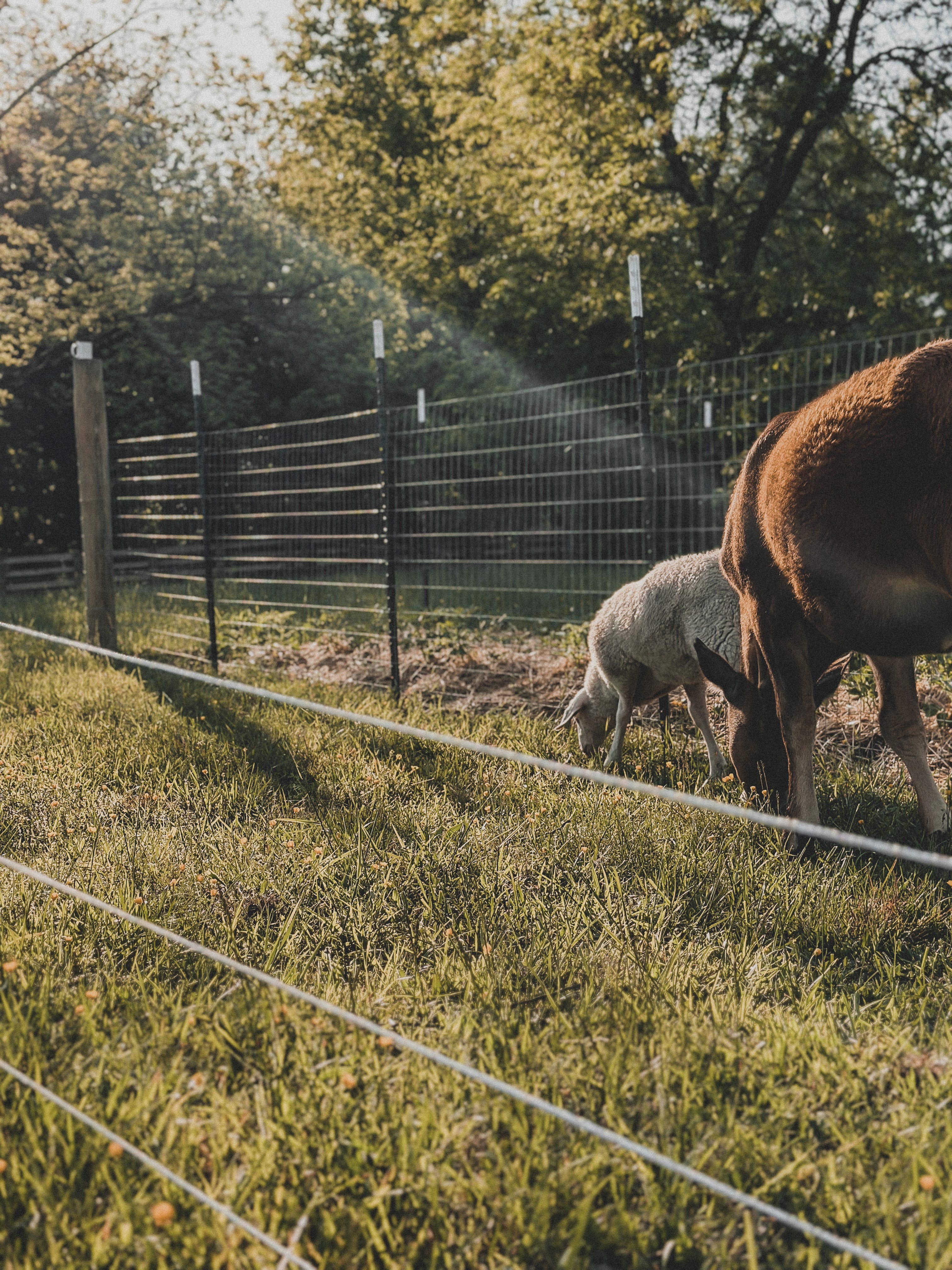
So now that we’ve gotten all the technicalities out of the way, let’s look at the historical aspect of shepherds. Because if you want to truly understand what a shepherd is, you must understand what a shepherd was during the agrarian biblical culture. And then, you must understand what it turned into afterwards. I believe you will be astounded at just how closely the physical change in outsourcing “shepherding” in the physical actually mirrored in the church in the spiritual.
Shepherds Throughout History
We often need to see what the definitions of something meant not just in the bible, but throughout the culture of the times. Homer’s stock epithet for a king is poimēn laōn, “shepherd of the people”—used repeatedly of Agamemnon and other leaders in the Iliad. And in the Ugaritic texts of Canaan, the Kirta (Keret) epic frames the ideal king as the shepherd of his people. This was simply the shared political grammar of the age.
In Isaiah 44:28, Yahweh calls Cyrus—the Persian emperor, no follower of Israel’s God—“my shepherd,” who will carry out God’s purpose. The biblical writers could apply it even to a foreign king when it suited God’s purposes.
You see, shepherds were not just herdsmen, they were also leaders. The term was interchangeable throughout social history. Yet they were mirrored perfectly.
Shepherds should have been strong leaders, selfless, able to fight off predators/enemies, able to foresee a threat before it arrives, alert, strong, wise, caring, consistent, responsible, and have endurance.
In the agricultural sense (from biblical times), they were often tent dwellers—dwelling with the flocks, nomadic, moving from pasture to pasture, well to stream. If there was nothing good to eat there, the shepherd moved his flock to the next pasture or watering hole.
Shepherds were not fragile. In fact, they were often dusted with the dirt they had been walking on. The Hebrew patriarchs are portrayed as tent-dwelling, semi-nomadic pastoralists—Abraham, Isaac, and Jacob moving flocks and herds between grazing grounds and wells, and wealth was measured in animals. Rachel is introduced as a working shepherdess; Moses spends forty years herding his father-in-law’s flock in Midian; David is pulled straight from the sheepfold, and describes killing a lion and a bear to defend the flock, sling in hand.
The shepherd led from the front, and the sheep followed his voice, rather than being driven from behind as in much of later European practice. Flocks were often small enough that the shepherd knew individual animals and named them.
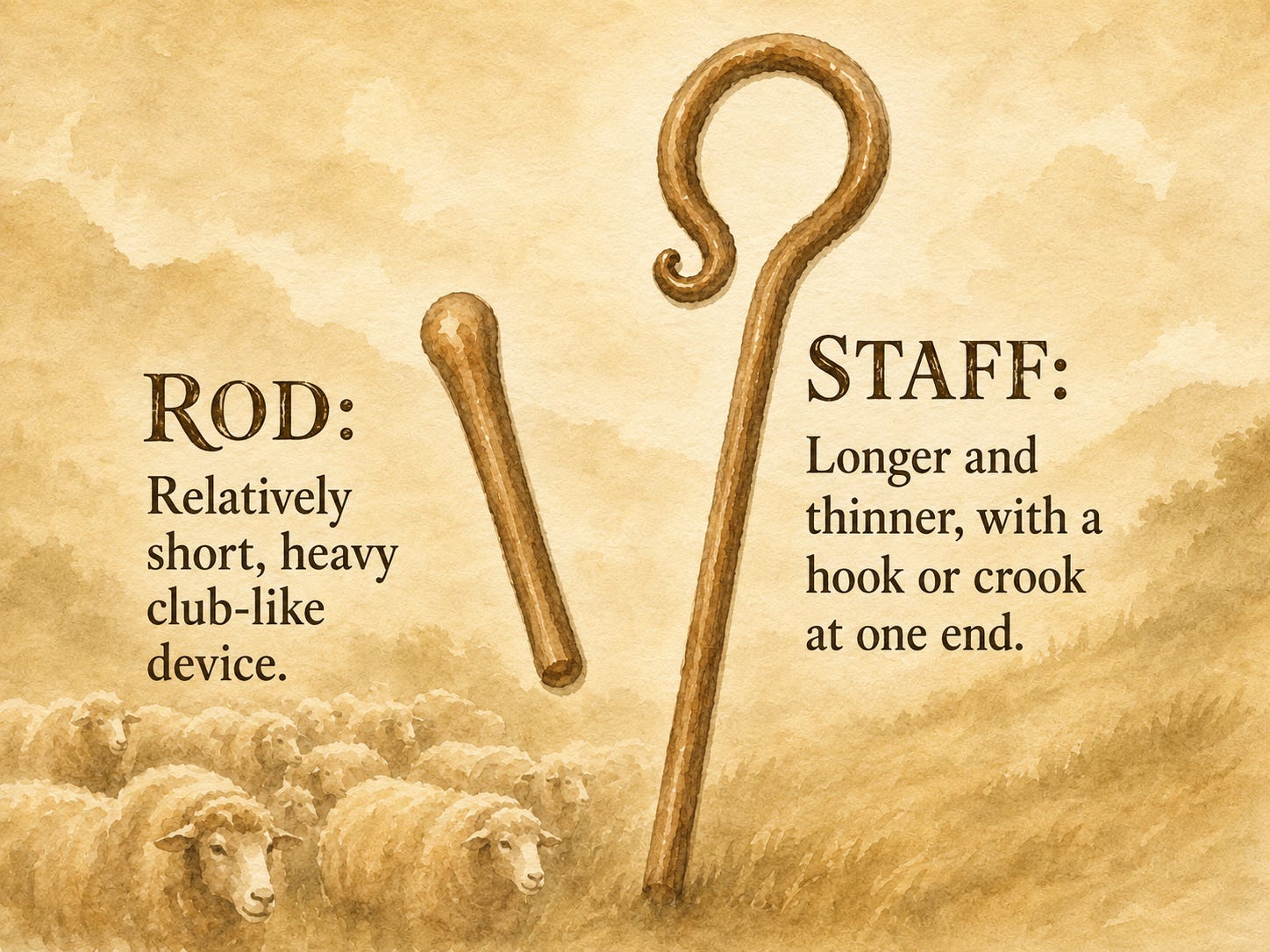
The rod and staff were two tools: a stout club (the rod) for defense against predators and the crook (staff) for guiding, catching, and rescuing sheep from ravines or thickets.
At night, sheep were gathered into a fold—often a rough stone enclosure with a single opening, across which the shepherd would lie down, literally becoming the “door.” Multiple flocks might share a communal fold overnight and separate again by voice in the morning.
There was a real distinction between the owner-shepherd and the hired hand: the hireling, with nothing invested, flees when the wolf comes. That contrast underlies the “Good Shepherd” teaching in John 10, where the shepherd knows his sheep by name, goes ahead of them, and lays down his life for them. The prophet Amos, notably, describes himself as a herdsman and tender of sycamore figs—a reminder that these were ordinary working people, not a literary abstraction.
Just read John 10…
“Most assuredly, I say to you, he who does not enter the sheepfold by the door, but climbs up some other way, the same is a thief and a robber. 2 But he who enters by the door is the shepherd of the sheep. 3 To him the doorkeeper opens, and the sheep hear his voice; and he calls his own sheep by name and leads them out. 4 And when he brings out his own sheep, he goes before them; and the sheep follow him, for they know his voice. 5 Yet they will by no means follow a stranger, but will flee from him, for they do not know the voice of strangers.” 6 Jesus used this illustration, but they did not understand the things which He spoke to them. 7 Then Jesus said to them again, “Most assuredly, I say to you, I am the door of the sheep. 8 All who ever came before Me are thieves and robbers, but the sheep did not hear them. 9 I am the door. If anyone enters by Me, he will be saved, and will go in and out and find pasture. 10 The thief does not come except to steal, and to kill, and to destroy. I have come that they may have life, and that they may have it more abundantly.
11 “I am the good shepherd.” The good shepherd gives His life for the sheep.12 But a hireling, he who is not the shepherd, one who does not own the sheep, sees the wolf coming and leaves the sheep and flees; and the wolf catches the sheep and scatters them. 13 The hireling flees because he is a hireling and does not care about the sheep.”
John 10:1-13 NKJV
I encourage you to pause and read the full chapter.
Continuing on…
Flocks pushed out into wilderness and marginal land in the wet season, and were drawn back toward settled areas and stubble fields at other times—a pattern the region’s Bedouin herders continued into modern times.
You can see an ebb and flow within shepherding. The shepherd knew the seasons—when to settle, when to move. When to fight, when to sit still. When to call, when to be silent.
Can you begin to see the picture that’s being painted as we move into the New Testament meaning of shepherd?
Shepherding changed when Rome industrialized it after Jesus’s time on earth. Wool became common to harvest (before that it was just hair sheep). Records of sheep were intricately kept. And the Roman governmental institution owned most of the sheep in the kingdom.
The Cistercian monasteries of medieval Europe became some of the largest wool producers in Europe (they bred and created wool breeds)—the great Yorkshire abbeys like Fountains and Rievaulx ran flocks in the tens of thousands, and English wool became the backbone of the medieval economy.
On the ordinary manor, the shepherd was a respected specialist, not a generic laborer. Estate-management treatises like Walter of Henley and the Seneschaucy spell out his duties and demand honesty above all—he handled valuable animals unsupervised for months.
A vivid early source is Ælfric's Colloquy (around 1000 AD), in which a shepherd describes his own work in the first person—driving the flock to pasture at dawn, standing over them through heat and cold with his dogs so wolves don't devour them, leading them back to fold, milking them twice a day, and making butter and cheese.
Things really changed in the 1500s. The big structural shift in Britain was enclosure. Common grazing was fenced into private holdings, which displaced many small herders and reshaped the shepherd from a communal figure into an employee of large sheep-farming operations. Sound familiar?
Guardian breeds like the Great Pyrenees and Anatolian shepherd are ancient—big, independent dogs that live with the flock and fight off predators. But the herding dog as we know it—above all, the Border Collie—was refined into a distinct working type in 19th-century Britain (the founding sire, Old Hemp, dates to 1893). A good dog effectively multiplied one shepherd's reach. But unfortunately, it also outsourced shepherding in its intimacy.
And now here we are in the twenty-first century, almost mirroring the change of the shepherd within the church—centralization and industrialization.
The New Testament Shepherd
Moses is trained for leadership by forty years herding his father-in-law's flock in Midian; God calls him at the burning bush while he is out with the sheep (Exodus 3). David is pulled straight from the sheepfolds—the youngest, left with the flock while his brothers are summoned (1 Samuel 16)—and he defends his sheep by killing a lion and a bear with his hands and sling (1 Samuel 17). Psalm 78:70–72 makes the connection explicit and beautiful: God took David from tending the ewes to shepherd Israel, and he did it with integrity of heart and skillful hands. When the elders crown him, they quote God's charge that he will "shepherd my people Israel" (2 Samuel 5:2). The herdsman of animals becomes the herdsman of the nation.
He also chose David His servant,
And took him from the sheepfolds;
From following the ewes that had young He brought him,
To shepherd Jacob His people,
And Israel His inheritance.
So he shepherded them according to the integrity of his heart,
And guided them by the skillfulness of his hands.Psalm 78:70–72 NKJV
Jeremiah pronounces woe on the “shepherds” who destroy and scatter God’s flock (Jeremiah 23:1–4). Ezekiel 34 is the towering example: a sustained oracle against the shepherds of Israel (secular and religious) who fed themselves and not the sheep, who ruled with force and let the flock be scattered and devoured. So God declares He will remove them, seek out His own sheep Himself, and set over them “one shepherd, my servant David”—Jesus.
Zechariah adds the image of the worthless shepherd who abandons the flock (Zechariah 11), and the stricken shepherd whose sheep scatter (Zechariah 13:7). Isaiah 40:11 holds the tender counterpart: God gathering the lambs in His arms.
The New Testament lands the whole tradition of shepherd on Jesus. Angels announce His birth to shepherds (poimēn) (Luke 2). He sees the crowds as sheep without a shepherd (Mark 6:34). In John 10 He is the Good Shepherd who knows His sheep by name, goes ahead of them, and—unlike the hired hand who flees the wolf—lays down His life for them.
Hebrews calls Him the great Shepherd of the sheep, and 1 Peter calls Him the Chief Shepherd. The word that pagan kings had claimed for their own glory is redirected onto the One who now rules after dying for the flock.
Yet in Ephesians Holy Spirit inspires Paul to write that some are still called to be shepherds.
11 And He Himself gave some to be apostles, some prophets, some evangelists, and some pastors and teachers, 12 for the equipping of the saints for the work of ministry, for the edifying of the body of Christ, 13 till we all come to the unity of the faith and of the knowledge of the Son of God…
Ephesians 4:11-13 NKJV
Notice pastor and teacher (didaskalos) are not the same. The “pastors” word there is the greek word for shepherd—poimēn.
The same word used for the shepherds that were out in the field watching their flocks at night. The same ones who were not fragile, but who guarded the sheep at all cost. They fed, watered, cared for, and guided their sheep. They dwelt with them—smaller flocks that they knew by name.
If there were larger herds, there were multiple shepherds, not just one. So that the sheep knew them all, and knew they were for them, not against them.
The shepherd and shepherdess were absolutely beautiful positions to hold. They were intimate. They were strong. They truly cared for the flock, and they would guard it at all costs. It was their wealth—their inheritance, their livelihood. Their passion.
Yet somehow in this century we have deconstructed the ministry of pastor to “teach a sermon on Sunday and be the leader of the church building”.
My friends, it is so much more beautiful and more intense than that.
And God is calling up the shepherds of this generation.
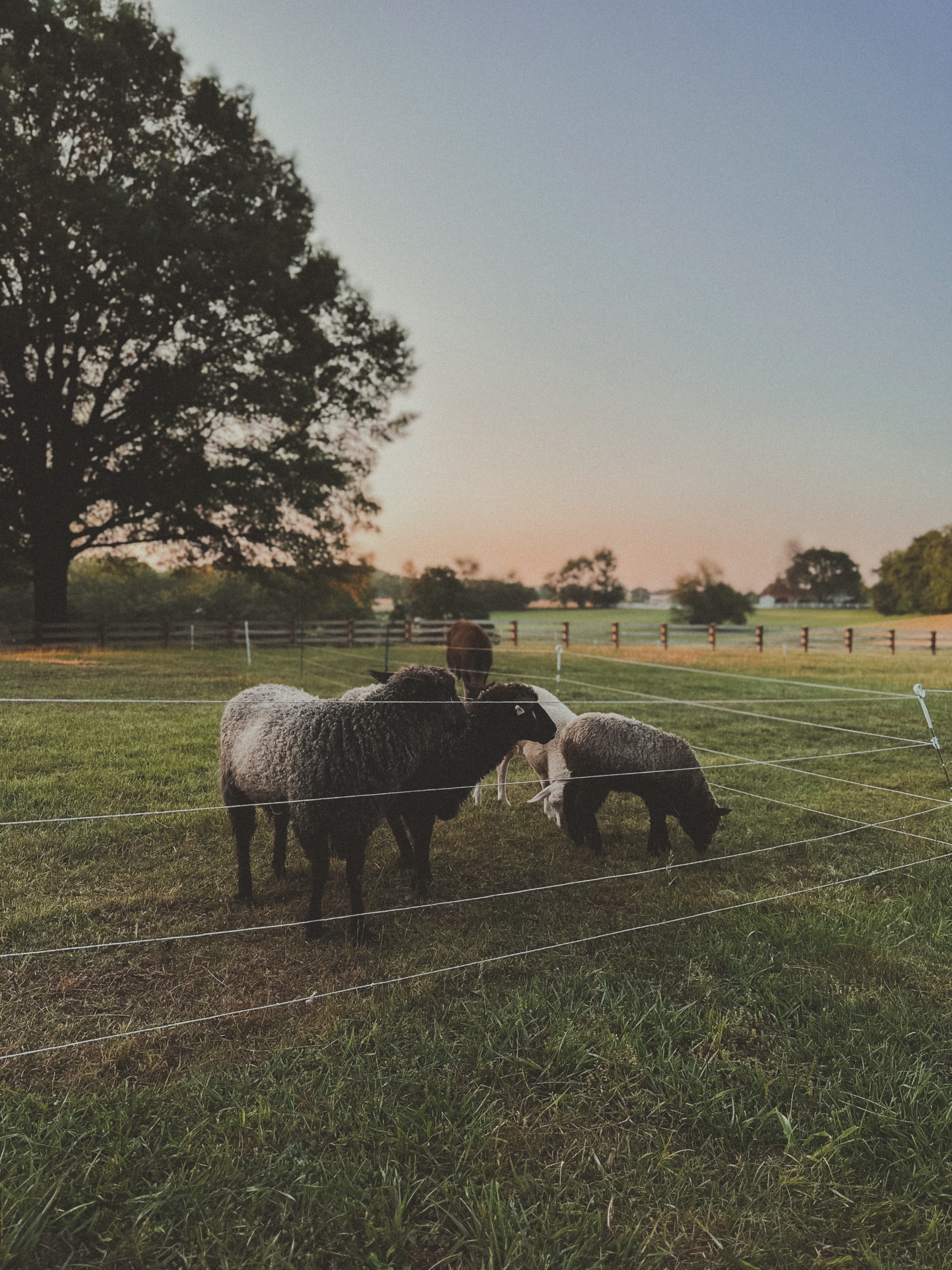
The rod does not beat the sheep over the head—it beats off predators of the flock.
The staff does not strangle the sheep with its crook—it pulls them out of the pits they fall in, and guides them out of harms way.
The shepherd is not standing behind a pulpit in a stationary position on a platform. Instead, he is moving and dwelling among the sheep. He knows his group by name. He knows when something is off because he is with them regularly. And even more important—the shepherd knows his Father’s voice clearly. The great Shepherd of them all.
The shepherd is fierce, has a natural inclination to when someone has predatory intentions, and understands moving the sheep away from threats. This is why scripture tells us to avoid people who cause division, slander, are immoral, and more.
The shepherd knows when the food and water aren’t enough, and the shepherd adjusts accordingly. The shepherd cares for the flock intimately, guides firmly, and builds up his flock spiritually so that they can be equipped for the seasons ahead.
The shepherd knows how to do confrontation well. This is important.
When I imagine a shepherd within an assembly in my head, I see a person that is extremely sensitive to the atmosphere. They can sense danger a mile away and probably get judged for being so discerning. But when there is a predator near a flock, you don’t try to love the “devil” out of the lion—you move the flock, or you wrestle with and kill the lion (figuratively).
I believe the body of Christ has been so focused on “apostle” and “prophet” for so long that we have greatly neglected equipping and building up the true shepherd. Partially because the shepherd is not only a gentle leader, but a fierce warrior. And for some reason we don’t know how to handle that in the body of Christ….yet. We want them to assume the role but only if they fit into the institution’s box. Yet the biblical shepherd is more than a Sunday morning preacher. So much more.
In fact, I question whether the shepherd/pastor was ever to assume the main leadership role of an institutionalized church at all. Because the church was never created to be institutionalized.
Maybe we will unpackage that in the next letter.
In the end, I feel this strongly—we are about to see the Lord greatly equip and reform the ministry of shepherd in the body of Christ. Don’t be surprised when the least likely in your spheres are suddenly finding themselves pastoring. Not on a stage, but within a community…around a table…within an assembly. The farmers, the homesteaders, the one who are rough around the edges, the warriors at heart, the ones who are courageous and bold but can shed tears when moved.
And for that I am excited.
For His Glory,
Amy
https://www.merriam-webster.com/dictionary/pastor
R. A. Stewart, “Shepherd,” in New Bible Dictionary, ed. D. R. W. Wood et al. (Leicester, England; Downers Grove, IL: InterVarsity Press, 1996), 1092.
https://biblehub.com/hebrew/7203.htm
https://biblehub.com/greek/4166.htm
Other resources used:
Sherratt, Andrew. 1981. “Plough and Pastoralism: Aspects of the Secondary Products Revolution.” In Patterns of the Past: Studies in Honour of David Clarke, ed. Ian Hodder, Glynn Isaac, and Norman Hammond, 261–305. Cambridge: Cambridge University Press. (The origin of the “Secondary Products Revolution” concept.)
Sherratt, Andrew. 1983. “The Secondary Exploitation of Animals in the Old World.” World Archaeology 15 (1): 90–104.
Code of Hammurabi, §§263–267 (a hired shepherd's liability for losses, with allowance for acts of god / predators). Translation: Martha T. Roth, Law Collections from Mesopotamia and Asia Minor, 2nd ed. Atlanta: Scholars Press, 1997.
Homer, Iliad: the recurring epithet poimēn laōn, "shepherd of the people/host" (of Agamemnon and other kings). Loeb Classical Library.
Bailey, Kenneth E. 2014. The Good Shepherd: A Thousand-Year Journey from Psalm 23 to the New Testament. Downers Grove, IL: IVP Academic.
Borowski, Oded. 1998. Every Living Thing: Daily Use of Animals in Ancient Israel. Walnut Creek, CA: AltaMira.
Borowski, Oded. 1987. Agriculture in Iron Age Israel. Winona Lake, IN: Eisenbrauns.
Thank you for this (which my wife found). It’s amazing how “industrial” and urban congregations can be in a town of 11,000. God is leading us to build a fellowship of, by and for the people on the outskirts, who are still tied to the land and animals. We’re not entirely sure how it will end up, but God is impressing on us how His sheep need worship, fellowship, and discipleship, which are all rooted in relationships … NOT projects and programs!
Thanks for this! I relate with a lot of what you wrote. I hope you develop more on that closing thought about shepherds having become the leaders of institutions. It really is noteworthy how the change in the role of shepherd in the Church has mirrored that of the agricultural shepherd in its industrialization and centralization. Would love to read you developing more on that idea!